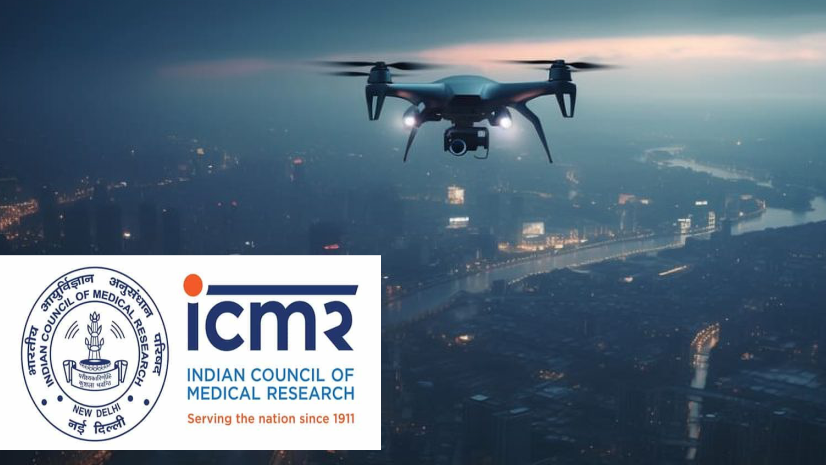

In a ground breaking initiative aimed at enhancing the efficiency of corneal transplant procedures, the Indian Council of Medical Research (ICMR) has embarked on testing drone technology to transport human corneas. This pilot project has the potential to transform how critical eye tissues are delivered across India's vast and often difficult-to-navigate geography. By reducing the time and risk associated with traditional transportation methods, drones could make corneal transplants faster, safer, and more accessible - especially for patients in rural and underserved areas.
The initiative is part of ICMR’s broader effort to explore drone applications in the healthcare sector. Drones have already proven their worth in transporting vaccines, blood, and medical supplies in disaster-hit or remote locations. Extending this technology to the field of ophthalmology signals an important shift in how India’s public health system leverages innovation to overcome logistical bottlenecks.
THE CHALLENGE OF CORNEA TRANSPLANTS IN INDIA
India has one of the highest burdens of corneal blindness in the world. According to the National Programme for Control of Blindness (NPCB), approximately 1.2 million people in India suffer from corneal blindness, and around 20,000 new cases are added annually. Corneal transplantation is the only restorative option for many of these patients, but a severe gap exists between cornea donations and transplants performed.
Even when corneas are donated, many go unused due to logistical constraints. Time is of the essence in corneal transplants the harvested tissue must be transported quickly and under optimal conditions to maintain viability. Delays caused by traffic, poor infrastructure, or long distances can compromise the quality of the donated cornea, making it unusable by the time it reaches the recipient hospital.
Why Drones?
The ICMR’s drone trials aim to solve this critical problem. By using unmanned aerial vehicles to transport corneas, the transit time can be significantly reduced. Drones can bypass ground-level traffic congestion, navigate rugged terrains, and deliver tissues directly to hospitals or eye banks within minutes.
In a recent trial conducted in Hyderabad in collaboration with LV Prasad Eye Institute, a cornea was transported via drone over a distance of 12 kilometers in less than 10 minutes a task that would have taken over 30 minutes by road in peak traffic conditions. This trial used a temperature- and humidity-controlled payload box to ensure that the cornea remained in a stable, sterile environment throughout the flight.
Technological Aspects
The drones being used are equipped with advanced navigation systems, including GPS, obstacle avoidance, and real-time tracking features. Most importantly, the payload compartments are engineered to maintain precise environmental conditions, which is crucial for the preservation of corneal tissue.
Each flight is closely monitored by a team of medical professionals and drone operators. If successful, such technology could eventually be integrated with hospital management systems to create seamless, automated chains of custody and documentation.
Further developments may include using AI to determine optimal flight paths or even deploying autonomous drone stations at major hospitals and eye banks across the country.
BENEFITS AND IMPACTS
The use of drones for cornea transportation holds transformative potential:
REGULATORY AND ETHICAL CONSIDERATIONS
ICMR’s initiative is being carried out under stringent ethical and legal supervision. The transportation of human tissue requires adherence to national and international guidelines for bioethics, safety, and airspace usage.
The Directorate General of Civil Aviation (DGCA) has been involved in granting permissions for flight trials. All drone flights for this program are operated in green or designated medical corridors and require prior notification to air traffic control.
Data privacy is another concern. As the corneas being transported are tagged with donor and recipient information, stringent cybersecurity protocols are being put in place to ensure confidentiality and compliance with health data protection norms.
CHALLENGE AHEAD
Despite the initial success, several hurdles remain:
THE ROAD AHEAD
ICMR’s project is still in its early stages, but the promise is evident. If results continue to be positive, the model could be replicated for liver, kidney, and heart tissue transportation in the future. A dedicated network of medical drones, regulated and monitored centrally, could revolutionize emergency healthcare and transplant delivery in India.
Moreover, this initiative supports the broader vision of "Digital India" and "Make in India," showcasing how homegrown innovations can solve deeply rooted healthcare challenges.
CONCLUSION
ICMR’s exploration into drone-based cornea transportation is a bold step into the future of medical logistics. While challenges remain, the benefits in terms of speed, accessibility, and tissue viability are compelling. As trials continue and regulatory frameworks adapt, drones may soon become the lifeline of India's corneal transplant network—giving the gift of sight faster, safer, and farther than ever before.