
For decades, scaling Mount Everest has been a feat that has challenged human endurance, willpower, and teamwork. At the heart of this legendary ascent have always been the Sherpas local Himalayan guides who risk their lives to carry heavy loads, set up base camps, and assist climbers in navigating treacherous terrain. But now, technology is offering a new partner to assist in these daunting tasks: drones.
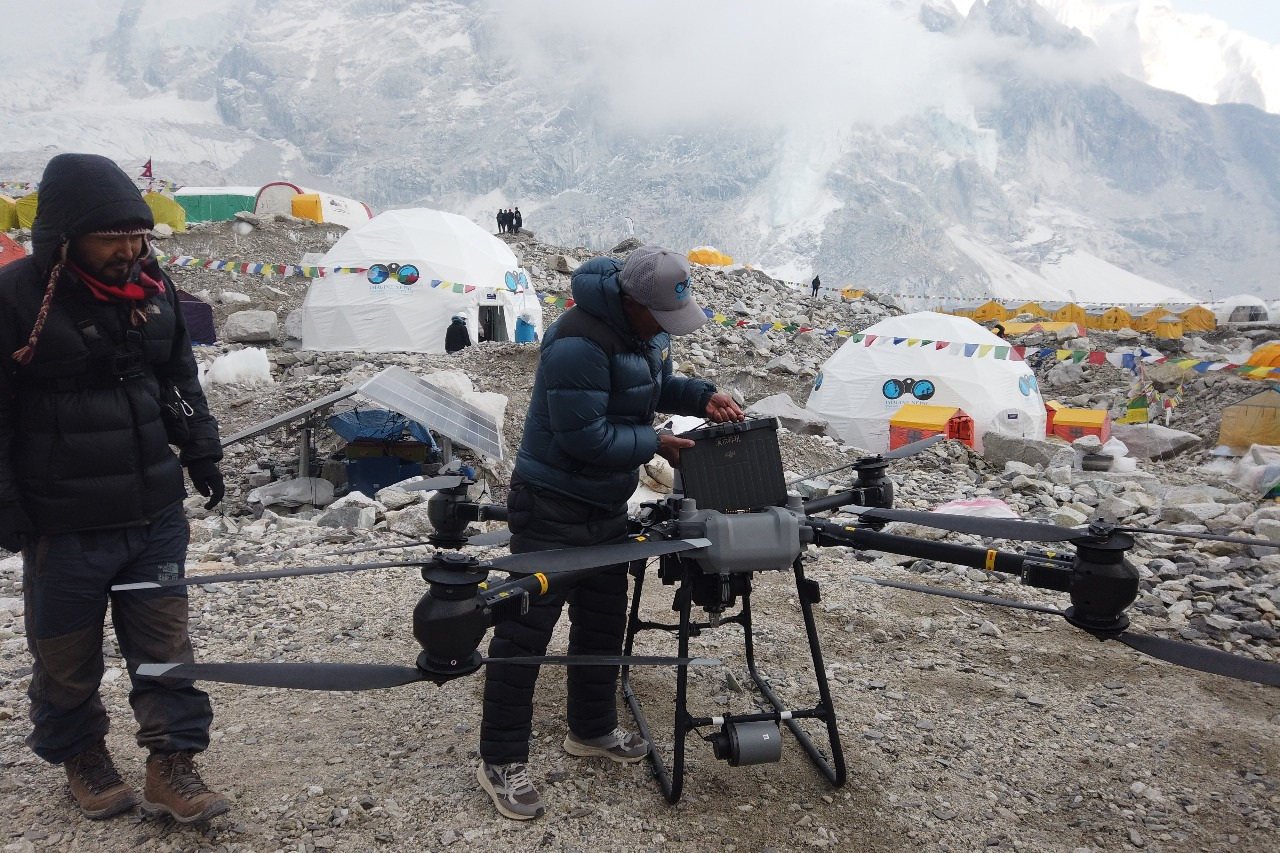
In recent developments, high-end drones equipped with powerful rotors, GPS-guided navigation, and strong payload capacities are beginning to take on roles traditionally held by human porters. These “robotic Sherpas” are proving to be lifesavers, quite literally, by transporting oxygen cylinders, food supplies, ropes, tents, and even waste tasks that have always been physically taxing and life-threatening at such extreme altitudes.
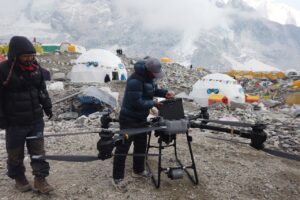
This transformation is not a distant dream. In the 2024 climbing season, a Swiss drone startup, in collaboration with local Nepalese authorities, successfully tested heavy-lift drones at altitudes above 6,000 meters. The drones completed trial deliveries of oxygen bottles and food packages to higher camps from base camp carrying payloads of up to 20 kg in challenging, low-oxygen environments. These tests have generated immense interest among expedition organizers and mountaineers, particularly given the growing demand for safer, more efficient logistics support on Everest.
The use of drones on Everest is not entirely new. Since around 2016, drones have been used occasionally to capture aerial footage or scout climbing routes. However, the latest generation of drones is built for more than just visuals they are engineered for high-altitude cargo transport. Their robust motors, specially designed batteries that can function in sub-zero temperatures, and real-time tracking systems make them ideal companions in the thin air and unpredictable weather of the Himalayas.
For Sherpas, the potential impact is enormous. Every year, dozens of Sherpas endure frostbite, altitude sickness, or worse, while ferrying supplies across the infamous Khumbu Icefall or scaling the Death Zone above 8,000 meters. By offloading some of the physical burden to drones, the safety of these essential workers could improve dramatically. In fact, the ability to send drones ahead to scout unstable ice or avalanche-prone areas may reduce the number of deadly accidents that have historically plagued these expeditions.
Moreover, drones could provide critical support during emergencies. In several recent incidents, climbers stranded without oxygen or supplies at higher camps were unable to receive help quickly due to bad weather or logistical constraints. With drones on standby, rescuers can now send life-saving equipment to climbers in peril without risking additional lives. Some models even feature infrared sensors and cameras that can detect body heat or movement under snow, proving useful for locating missing persons.
The environmental impact of drone deployment also adds a new layer of benefit. Everest has been grappling with the challenge of human waste and garbage left behind by climbers. Drones capable of carrying lightweight trash loads back to base camp can contribute significantly to cleanup efforts. In the long term, this could preserve the sanctity of the world’s tallest mountain and reduce the ecological footprint of tourism.
Still, deploying drones at such extreme heights is not without challenges. The thin air affects lift, and the cold temperatures shorten battery life. Navigation becomes complicated with high wind speeds, sudden weather changes, and GPS interference due to terrain. To counter this, drone companies are developing high-performance batteries with temperature-resistant casings, autonomous navigation algorithms, and AI systems that can make split-second decisions. The aim is to make drones not just functional, but reliable and safe even in the harshest Himalayan conditions.
Local sentiment toward this technological intervention is cautiously optimistic. While Sherpas remain irreplaceable due to their experience, intuition, and deep knowledge of the terrain, drones are seen as complementary tools rather than competitors. Tenzing, a veteran Sherpa guide who has summited Everest 12 times, said in an interview, “If a drone can carry one less oxygen cylinder for me, maybe I’ll live longer. It's not replacing me, it's helping me.”
The Nepalese government is also considering regulatory frameworks to allow and monitor the use of drones in mountain expeditions. Controlled airspace, no-fly zones around wildlife reserves, and emergency response protocols are being developed to ensure responsible usage. Expedition organizers, meanwhile, are already beginning to include drone services in their logistics planning, seeing them as value-added tools that could enhance both safety and efficiency.
International interest is surging. Adventure companies from Europe, the U.S., and China are in talks with drone manufacturers to lease equipment during climbing seasons. Insurance companies are also taking note, considering drones as risk-mitigation tools which could potentially reduce premiums for expeditions. Some climbers even view drones as tools of personal empowerment being able to monitor their own routes or send distress signals via drone connectivity systems.
Looking to the future, the integration of drones into high-altitude expeditions could redefine the very experience of summiting Everest. While the romantic notion of a climber battling the mountain alone may persist in stories and films, the reality on the ground or in the air is changing. Safety, sustainability, and support are now prioritized alongside bravery and endurance.
In conclusion, the arrival of drones on Mount Everest marks the dawn of a new age in high-altitude exploration. These machines are not here to replace the brave Sherpas who have led climbers for generations, but to work alongside them, easing their burdens and enhancing expedition outcomes. As technology soars to new heights literally the world’s highest peak may soon become a little less perilous, a little more efficient, and a lot more futuristic.