

Highlight
India is rapidly advancing drone battery technology with indigenous innovations in solid-state cells, LFP packs, thermal-safe chemistry, and ultra-fast charging. These breakthroughs are improving endurance, reducing fire risks, and enabling BVLOS operations. Make-in-India energy systems are now powering the next generation of long-range, high-efficiency drones.
The performance of a drone is ultimately determined by one critical component its battery. Whether it is endurance, payload delivery, thermal stability, or safety, the battery chemistry defines the limits of UAV capability. As India strengthens its drone manufacturing ecosystem under the Make-in-India mission, local innovation in advanced battery technology has become a national priority. Indian startups, research labs, and energy-tech firms are now developing next-generation battery systems specifically engineered for tropical climates, high-duty cycles, and long-range Beyond Visual Line of Sight (BVLOS) missions.
This technical blog deep-dives into how India is building the future of drone batteries covering solid-state cells, LFP advancements, BMS design, thermal safety, and ultra-fast charging solutions.
The Limitations of Conventional Lithium-Polymer (Li-Po) Batteries
For years, most Indian drones have used Li-Po batteries due to their:
- High discharge rate
- Light weight
- High power-to-weight ratio
However, Li-Po packs also come with major limitations:
- Risk of thermal runaway and fire
- Swelling (gas formation during repeated flight cycles)
- Limited cycle life (250–350 cycles)
- Poor performance in high-temperature environments
India’s hot climate, especially during summer operations above 40°C, further increases stress on Li-Po chemistry. These constraints pushed the Indian drone ecosystem to search for safer, more robust alternatives.
Why India Is Shifting to Advanced LFP Drone Batteries?
Lithium Iron Phosphate (LFP) batteries are becoming the dominant choice for drones operating in India. Indian energy manufacturers are now redesigning LFP packs to meet UAV-specific requirements such as:
- Higher discharge capability
- Low internal resistance
- Compact form factor
- Weight optimization for multi-rotor systems
Technical Benefits of LFP for Indian Drones
- Thermal Stability Above 90°C
LFP is highly resistant to thermal runaway, making it ideal for India's extreme climate. - Longer Cycle Life
800–2000 charge cycles → lower operating cost for drone service providers. - Safe Chemistry
Non-flammable phosphate structure adds stability even under mechanical stress. - Stable Voltage Curve
Improves motor efficiency and reduces ESC heating.
Use Cases for LFP in India
- Agricultural drones (high payload + long spraying hours)
- Heavy-lift logistics drones
- Surveillance drones operating under sunlight for extended durations
- Drone taxi and eVTOL prototypes
Due to these attributes, LFP is emerging as the “Indian standard” for durable UAV operations.
Solid-State Batteries: The Future of Indian UAV Endurance
Solid-state batteries (SSBs) are widely considered the holy grail of energy storage, and India has begun to accelerate indigenous development.
Key Technical Advantages
- Up to 2x energy density compared to Li-Po
- Solid electrolyte prevents leakage and thermal runaway
- Extended cycle life more than 2000 cycles
- Compact architecture → lighter battery packs
- High-speed charging with reduced heat
Status of Solid-State Battery R&D in India
Indian R&D institutions and energy-tech companies are experimenting with:
- Lithium metal anodes (high capacity)
- Ceramic electrolytes (safer than polymer electrolytes)
- Hybrid glass-ceramic materials (stability at high temperatures)
The primary challenge remains scaling from lab prototypes to mass production, but the foundations are strong. Within the next few years, Indian solid-state batteries may significantly extend flight times for BVLOS drones.
Indigenous Battery Management Systems (BMS)
A battery is only as smart as the system that manages it. Indian drone and battery manufacturers are now building drone-specific BMS architectures rather than repurposing EV BMS systems.
Key Functions of a Drone-Optimized BMS
- Real-Time Cell Balancing
Maintains uniform voltage across multi-cell packs, ensuring maximum usable capacity. - Thermal Monitoring Across Multiple Sensors
Drone packs now use 3–5 thermistors for precise hotspot detection. - High-C Discharge Monitoring
Crucial for heavy-lift drones demanding >200A peak current. - Dynamic Power Output Control
Prevents voltage sag during rapid throttle changes. - Health Monitoring + Predictive Analytics
AI-driven algorithms predict cycle life, degradation rate, and safe discharge limits.
Plug-and-Fly Smart Batteries
Several Indian drone companies now develop “smart batteries” with:
- Built-in digital BMS
- CAN bus communication
- QR-coded battery health logs
- Over-the-air firmware updates
This integration makes battery replacement safer and more efficient for drone operators.
Battery Chemistry Designed for Indian Climate and High Humidity
Indian innovators are customizing chemistry for:
- High humidity zones (Coastal India)
- Dust-heavy environments (Western plains and Deserts)
- Cold weather altitudes (Himalayan border areas)
Climatic Adaptations Include
- Moisture-resistant cell housing
- Enhanced gasket insulation
- Improved venting design
- Low-temperature electrolytes for mountain operations
- Dust-proof sealant layers around terminals
This localized engineering gives Indian drone batteries a strong durability advantage over imported packs.
Fast-Charging Technologies: Reducing Drone Downtime
As drone operations scale across agriculture, logistics, and surveillance, fast charging becomes mission-critical. Indian companies are developing rapid charging systems based on:
1. High-C Charging Protocols
Charging at 3C–6C without overheating the pack.
2. Active Cooling Chargers
Integrated air channels or liquid cooling helps maintain optimal charging temperatures.
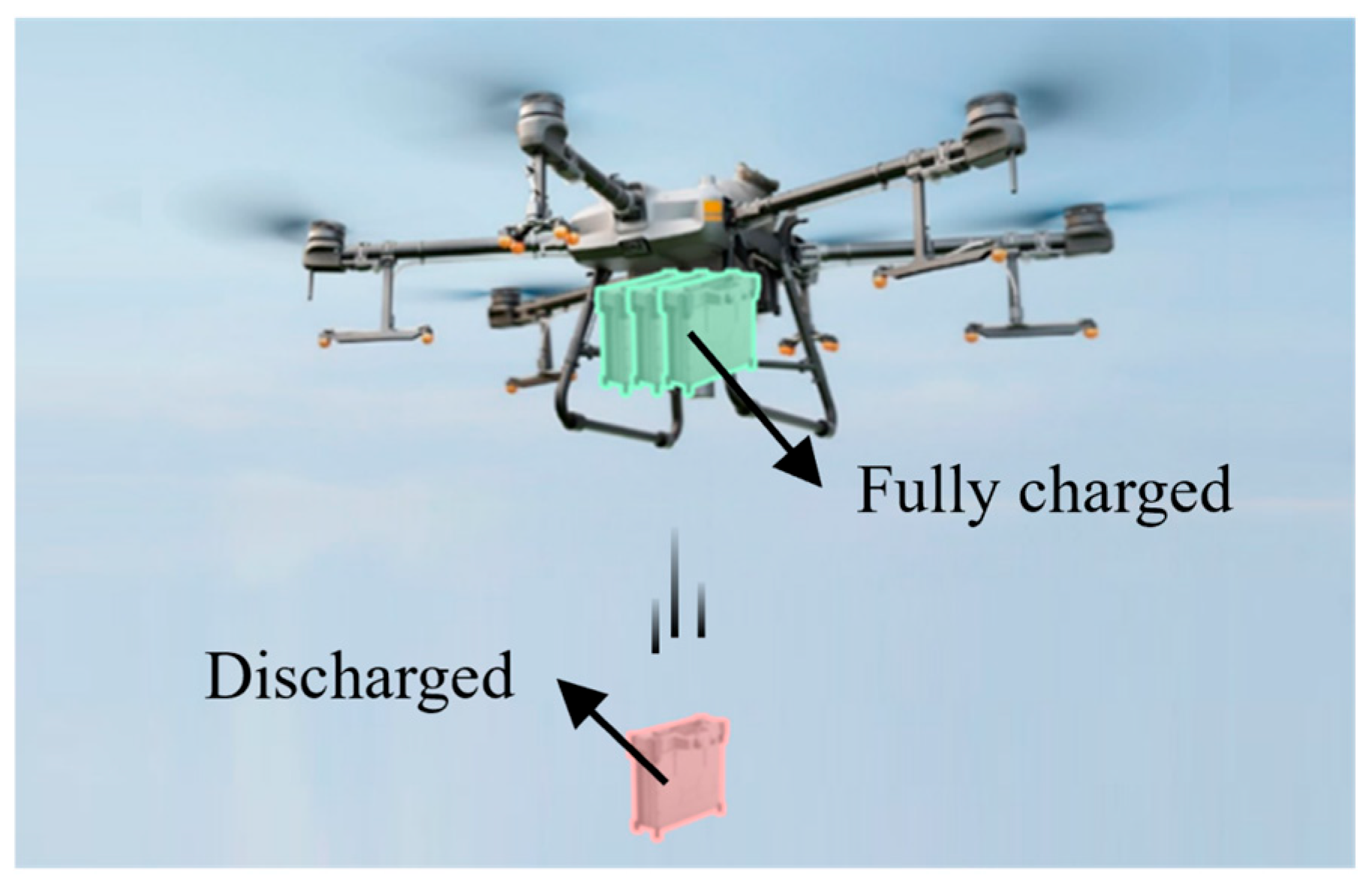
3. Swappable Battery Docking Stations
Used for:
- Agriculture spraying drones
- Delivery drones
- Continuous surveillance operations
Drones can now swap batteries in 10–20 seconds, achieving near-continuous operation.
4. On-Field Solar Charging
For rural and agricultural use cases, solar-powered fast chargers with MPPT controllers minimize operational cost.
Graphene and Nano-Structured Battery Research in India
Indian battery researchers are experimenting with:
- Graphene-enhanced cathodes
- Silicon-graphite anodes
- Lithium-sulfur (Li-S) configurations
- Nano-porous separators to enhance ionic conductivity
These emerging technologies could further increase:
- Flight duration
- Power delivery
- Thermal resistance
- Charging efficiency
This R&D will position India as a global contributor to advanced UAV battery science.
Safety Enhancements: A Priority for Indian Drone Batteries
Safety remains at the core of Indian battery engineering. New packs now include:
- Fire-retardant coatings
- Pressure relief valves
- Dual-layer PTC protection
- Short-circuit isolation
- Reinforced cell welding
- Shock-absorbing internal foam layers
These features significantly reduce risks during high-payload or long-endurance flights.
Conclusion
India’s drone battery ecosystem has entered a transformative phase. With continuous R&D in LFP chemistry, solid-state batteries, BMS optimization, thermal-resilient design, and fast-charging technologies, India is building drone energy systems that match global standards while being tailored to India's unique climatic challenges.
These breakthroughs will ultimately define the next generation of Indian-made drones—safer, more powerful, longer-lasting, and globally competitive.