
Highlight
Urban Air Mobility (UAM) is emerging as the next frontier for India’s Make-in-India drone ecosystem. With indigenous passenger drones, air taxis, cargo corridors, and medical delivery systems, India is building future-ready aerial transport solutions that will reduce congestion, enhance connectivity, and position the nation as a global UAM innovator.
India stands at the cusp of an urban transportation revolution, and at its heart lies a rapidly evolving segment Urban Air Mobility (UAM). As cities grow denser and surface traffic becomes increasengly unsustainable, India is looking upward, toward the skies, to unlock a new mobility era. Driven by the Make-in-India mission, indigenous drone manufacturers, startup innovators, and aeronautical engineers are developing advanced urban aerial systems that may soon transform how Indians travel, commute, receive emergency aid, and move goods. UAM, once a futuristic concept, is now gaining real momentum in India due to supportive policies, rapid drone adoption, and the emergence of robust domestic manufacturing capabilities.
The Need for Urban Air Mobility in India
India’s urban congestion is among the worst globally. Cities like Bengaluru, Mumbai, and Delhi consistently rank high in traffic delays, fuel consumption, and lost economic productivity. Traditional road expansion or metro systems, though necessary, are not enough to close the gap between population growth and transportation demand. Urban Air Mobility presents an entirely new dimension of travel cutting cross-city journey times from hours to minutes.
UAM solutions such as passenger drones, electric vertical take-off and landing vehicles (eVTOLs), and drone taxis can bypass ground congestion entirely. For emergency medical transport, disaster evacuations, and urgent logistics, aerial mobility can drastically enhance outcomes.
Make-in-India: Empowering Indigenous UAM Development
A defining feature of India’s UAM journey is its focus on indigenous innovation. Several breakthroughs by Indian startups are accelerating progress:
- Passenger drones capable of carrying one or two individuals, designed and manufactured locally.
- eVTOL aircraft prototypes developed using Indian electronics, composites, and control systems.
- Autonomous navigation software built by Indian AI companies.
- Drone taxi models using indigenous motors, propellers, and flight controllers.
India’s Production-Linked Incentive (PLI) schemes and liberalised drone rules have further created fertile ground for UAM development. The government is encouraging drone-based logistics, mapping zones, and establishing corridors for commercial testing.
Passenger Drones: India's Next Leap in Urban Transport
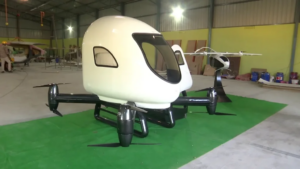
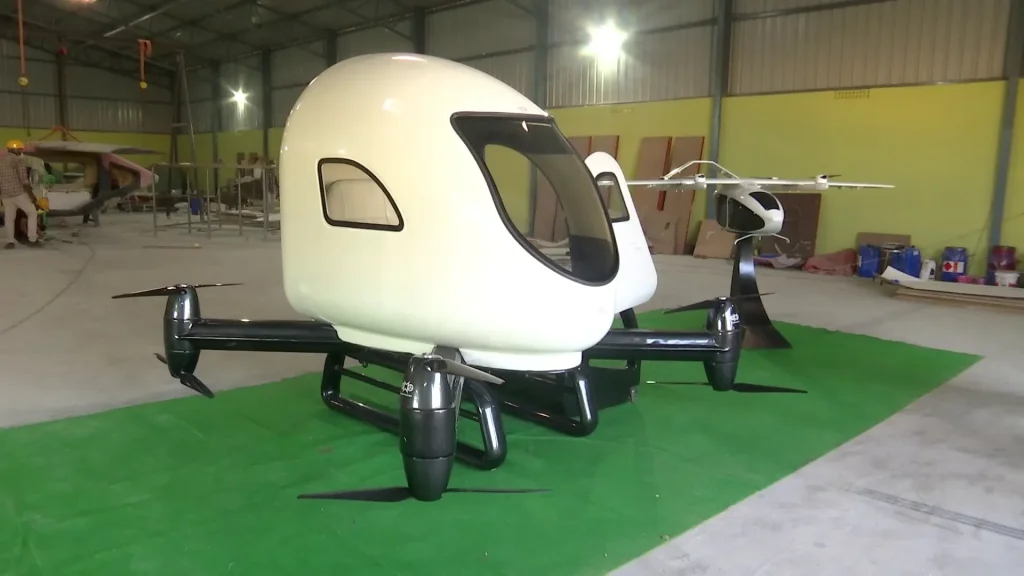
One of the most exciting developments in UAM is the rise of indigenous passenger drones. Several Indian companies are testing prototypes that can:
- Carry 80–120 kg payloads
- Fly 20–40 minutes
- Reach speeds of 100 km/h
- Operate autonomously or with remote pilots
Urban passenger drones can serve multiple roles:
- Drone taxis for high-density business districts
- Inter-campus mobility for large industrial, university, or corporate zones
- Emergency medical evacuation
- Tourism and experiential flights in controlled zones
While commercial rollout requires regulatory clearance, the development phase is progressing rapidly under the Make-in-India banner.
Medical Air Corridors: Faster, Safer, Indigenous
Indian startups are collaborating with hospitals to test drone-based medical delivery corridors. These corridors allow transportation of:
- Blood units
- Organs for transplant
- Vaccines
- Emergency medicines
- Portable ventilators and diagnostic kits
What traditionally takes 30–60 minutes by road can now be delivered in 5–10 minutes by air. In life-saving scenarios, this time reduction is transformative.
Make-in-India drones used in these corridors are designed for:
- Temperature-controlled payload systems
- Automated docking and charging
- AI-based route selection
- Fail-safe emergency landing systems
Such corridors lay the foundation for future UAM passenger routes.
Cargo Drones and Aerial Logistics for Smart Cities
Urban Air Mobility doesn’t only refer to transportation of people it includes cargo, courier, and e-commerce deliveries via medium to heavy-lift drones. Indian drone manufacturers have developed cargo drones with payload capacities ranging from 5 kg to 200 kg, suitable for:
- Cross-city deliveries
- Last-mile e-commerce logistics
- Infrastructure inspections
- Food delivery in gated communities
- Industrial spare-part supply chains
Cities like Mumbai, Hyderabad, and Bengaluru are already running pilot projects for drone-based delivery ecosystems. Aerial logistics can dramatically reduce road congestion, emissions, and delivery timelines.
Infrastructure for Urban Air Mobility
To make UAM possible, India is building foundational infrastructure:
1. Vertiports
Mini-airports for vertical take-off vehicles.
Features include charging pads, landing guidance lights, repair bays, and passenger lounges.
2. Drone Corridors
Designated aerial lanes for safe operations.
Corridors reduce risks and simplify navigation.
3. UTM (Unmanned Traffic Management) Systems
India is developing indigenous UTM systems that function like traffic control towers for drones.
They manage:
- Real-time drone tracking
- Conflict avoidance
- Weather monitoring
- Communication with manned aircraft
4. Smart City Integration
UAM has been incorporated into several Smart City missions, enabling better planning for vertical expansion and multi-layered urban mobility.
Policies and Regulations Supporting UAM
The Government of India has introduced progressive regulations to facilitate the growth of UAM and drones:
- Drone Rules 2021 simplified approvals and reduced permission layers.
- Green Zones now allow operations without complex licensing.
- Drone Shakti Mission promotes women-led drone businesses.
- PLI Scheme for Drones provides financial support to Indian manufacturers.
- DGCA Sandbox Framework enables controlled testing of pilot UAM projects.
These policy developments give Indian manufacturers a clear runway to scale production.
Challenges Ahead
Despite progress, UAM remains a developing ecosystem. Key challenges include:
- Ensuring robust safety standards
- Achieving certification for passenger drones
- Managing airspace in densely populated cities
- Creating public trust for flying taxis
- Standardising battery technology
- Noise control
- Weather-proofing against monsoons and dust
Nevertheless, Indian innovators are aggressively addressing these gaps through R&D, partnerships with IITs, and collaboration with global aviation experts.
The Road Ahead: India’s UAM Vision
India’s future UAM landscape will likely include:
- Drone taxis connecting airports to city centres
- Emergency eVTOL routes for healthcare
- Delivery drones operating during peak traffic hours
- Inter-state short-range UAM networks
- Tourist routes over beaches, lakes, and heritage areas
- Industrial UAM services for factories, ports, and logistics hubs
By 2035, experts predict India may operate thousands of UAM vehicles daily, contributing to reduced congestion, sustainable mobility, clean energy use, and smarter urban planning.
Conclusion
Urban Air Mobility represents one of the most ground breaking shifts in India’s transportation future. What sets India's UAM journey apart is the Make-in-India foundation where drones, systems, batteries, avionics, and software are being developed locally. India is not merely adopting global UAM trends it is shaping them, innovating them, and preparing to lead in this domain.
With indigenous talent, supportive policy, and rapid urban growth, India is primed to become a global hub for UAM innovation. The skies above Indian cities may soon host a new era of mobility safer, faster, greener, and proudly Made in India.