
Highlight:
A silent technological revolution is unfolding in the skies above us. Powered by artificial intelligence, advanced sensors, automation, and real-time analytics, modern drones are transforming industries, infrastructure, agriculture, security, and urban management. These intelligent aerial systems are reshaping how humans collect information, make decisions, and interact with the world.
The Intelligence Revolution Happening Above Us
For decades, the sky represented exploration, aviation, and communication. Today, it has become the stage for one of the most significant technological transformations of the modern era. Across cities, industrial zones, agricultural fields, disaster areas, and infrastructure networks, intelligent drones are quietly reshaping the way industries operate and how societies gather and process information.
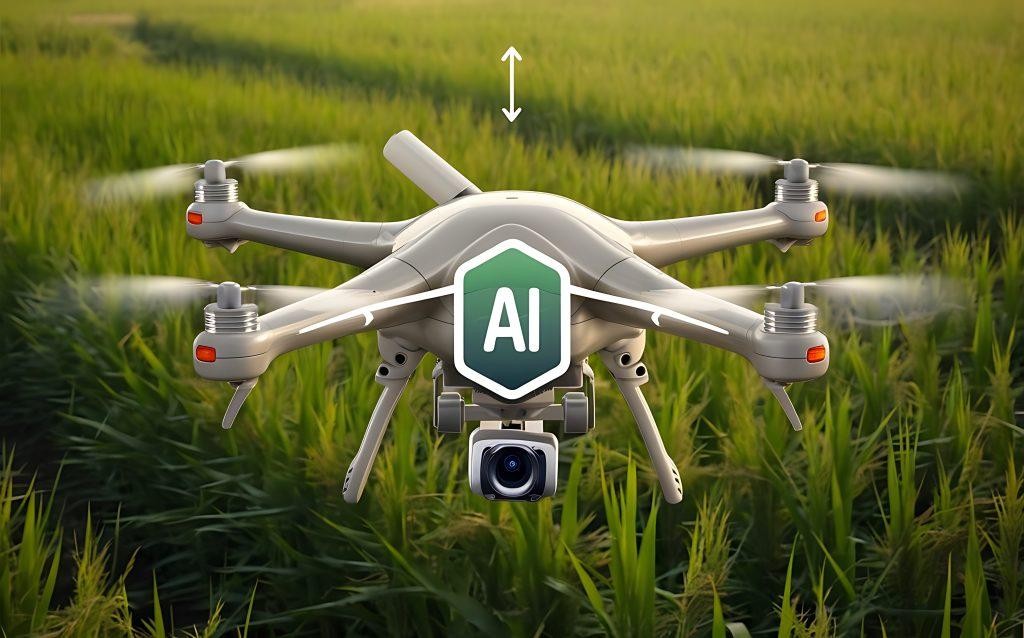
What was once considered futuristic technology has now become part of everyday industrial operations. Modern unmanned aerial vehicles (UAVs) are no longer simple flying cameras. Equipped with artificial intelligence, autonomous navigation systems, advanced sensors, real-time communication networks, and predictive analytics, drones are evolving into intelligent aerial platforms capable of supporting highly complex operations.
This ongoing transformation can be described as an intelligence revolution happening above us — a revolution driven by data, automation, and aerial intelligence.
From Flying Cameras to Intelligent Systems
The early commercial drone market focused heavily on photography and videography. Drones quickly gained popularity because they offered affordable aerial perspectives that were once accessible only through helicopters or specialized aircraft.
However, the real potential of drone technology extended far beyond visual content creation. As processing power, sensor technology, and artificial intelligence advanced, drones began evolving into intelligent systems capable of collecting, analyzing, and transmitting valuable information in real time.
Modern drones can now:
- Navigate autonomously
- Avoid obstacles
- Detect structural damage
- Monitor environmental conditions
- Analyze agricultural health
- Generate 3D terrain models
- Identify thermal anomalies
- Support emergency rescue operations
This shift transformed drones from remote-controlled devices into highly capable aerial intelligence platforms.
The Rise of AI-Powered Drone Technology
Artificial intelligence is at the center of the drone intelligence revolution. AI enables drones to process massive amounts of data rapidly and make operational decisions with minimal human intervention.
Machine learning algorithms allow drones to recognize patterns, identify objects, predict changes, and optimize flight behavior. AI-powered drones can inspect infrastructure, analyze crop conditions, monitor traffic systems, and even coordinate with other drones during autonomous missions.
Computer vision technology has become especially important in enabling intelligent drone operations. By interpreting visual information in real time, drones can:
- Detect obstacles
- Track moving objects
- Identify defects
- Navigate dynamic environments
- Improve surveillance accuracy
The integration of AI is transforming drones into decision-support systems rather than simple data collection tools.
Smart Sensors: The Foundation of Aerial Intelligence
The intelligence of modern drones depends heavily on advanced sensor technologies. Sensors act as the drone’s eyes, ears, and environmental awareness systems.
Today’s industrial drones may include:
- GPS modules
- LiDAR sensors
- Thermal cameras
- Multispectral imaging systems
- Ultrasonic sensors
- Inertial Measurement Units (IMUs)
- AI-powered visual recognition systems
These technologies allow drones to gather precise environmental data across industries such as agriculture, mining, energy, infrastructure, logistics, and defense.
For example, thermal sensors help identify overheating electrical systems, while multispectral cameras analyze crop health in precision agriculture. LiDAR sensors generate highly accurate 3D terrain models for construction and urban planning.
The combination of multiple sensor systems allows drones to operate with remarkable situational awareness and accuracy.
Transforming Industries Through Aerial Intelligence
The intelligence revolution happening above us is already transforming industries worldwide.
Agriculture
Precision agriculture drones help farmers monitor crops, detect disease, optimize irrigation, and improve yield forecasting. By using aerial analytics, farmers can make data-driven decisions while reducing water, fertilizer, and pesticide waste.
Infrastructure and Construction
Drones now inspect bridges, highways, railways, pipelines, and power lines faster and more safely than traditional methods. Real-time aerial mapping and digital twin technologies are improving infrastructure planning and maintenance.
Energy and Utilities
Energy companies use drones for thermal inspections, renewable energy monitoring, and predictive maintenance. UAVs reduce operational risks while improving efficiency in large-scale infrastructure systems.
Disaster Management
In emergency situations, drones provide rapid situational awareness, search-and-rescue support, and damage assessment. Their ability to access dangerous or inaccessible areas makes them critical tools during disasters.
Logistics and Delivery
Autonomous delivery drones are beginning to reshape supply chain systems and last-mile logistics. Future urban environments may rely heavily on aerial delivery networks for medical supplies, retail products, and emergency transportation.
The Emergence of Smart Airspaces
As drone operations increase, the skies themselves are becoming more intelligent. Advanced Unmanned Traffic Management (UTM) systems are being developed to coordinate drone traffic safely and efficiently.
These digital airspace management platforms use:
- AI-driven monitoring
- Real-time communication systems
- Automated flight authorization
- Collision avoidance technologies
- Predictive analytics
Smart airspaces will become essential for supporting future drone ecosystems involving autonomous fleets, delivery systems, emergency response operations, and urban air mobility networks.
The intelligence revolution is therefore not limited to drones alone; it also includes the creation of connected aerial infrastructure systems.
Ethical and Privacy Challenges
While drone intelligence offers enormous benefits, it also raises important ethical and privacy concerns. AI-powered aerial surveillance systems can collect large amounts of visual and environmental data, creating questions around:
- Privacy protection
- Data security
- Responsible surveillance
- Ethical AI usage
- Public transparency
As drone technology becomes more autonomous and widespread, governments and industries must establish responsible regulatory frameworks that balance innovation with civil liberties and public trust.
Building ethical aerial ecosystems will be essential for long-term acceptance and sustainable growth.
The Future of Autonomous Aerial Ecosystems
The next phase of the intelligence revolution will likely involve highly autonomous aerial ecosystems where drones communicate with each other, infrastructure systems, and AI-driven cloud platforms.
Future drone networks may include:
- Autonomous inspection fleets
- AI-powered delivery systems
- Drone swarms
- Smart city aerial infrastructure
- Emergency response networks
- Environmental monitoring systems
Advancements in edge computing, battery technology, wireless communication, and artificial intelligence will continue accelerating drone capabilities.
Over time, drones may evolve from individual machines into integrated components of larger intelligent systems supporting urban management, industrial automation, and digital transformation.
Conclusion
The intelligence revolution happening above us is redefining the relationship between technology, data, and human decision-making. Modern drones have evolved far beyond photography, becoming intelligent aerial systems capable of transforming industries, improving safety, and enabling real-time operational intelligence.
Powered by artificial intelligence, advanced sensors, automation, and connected infrastructure, drones are shaping the future of agriculture, logistics, infrastructure, disaster response, and smart cities.
As aerial intelligence continues advancing, the skies above us will increasingly become active digital ecosystems supporting a smarter, faster, and more connected world.