

"The drone industry is rapidly shifting from hardware-centric sales to Drone-as-a-Service (DaaS), enabling organizations to access aerial intelligence without owning aircraft. Subscription-based services, AI-driven analytics, and cloud platforms are transforming drones into scalable business solutions, accelerating enterprise adoption while reducing costs, operational complexity, and technology barriers."
The global drone industry is experiencing a fundamental transformation in the way businesses acquire and utilize unmanned aerial technologies. For over a decade, growth was primarily driven by hardware innovation, with manufacturers competing to develop drones featuring longer flight times, higher payload capacities, improved imaging systems, and enhanced navigation capabilities. While these technological advancements established the foundation of the commercial UAV ecosystem, the industry's value proposition is rapidly evolving beyond hardware ownership. Today, organizations are increasingly seeking outcomes rather than equipment, giving rise to Drone-as-a-Service (DaaS)—a business model that is reshaping how enterprises deploy aerial intelligence.
Drone-as-a-Service represents a paradigm shift similar to the transformation witnessed in cloud computing, where businesses moved from purchasing expensive servers to subscribing to scalable digital infrastructure. Instead of investing significant capital in drone fleets, software, pilot training, maintenance, regulatory compliance, and data processing, organizations can now access comprehensive drone solutions through service providers. These providers deliver end-to-end capabilities, including flight operations, data acquisition, analytics, reporting, equipment maintenance, and regulatory management under flexible subscription or project-based models.
The transition from hardware sales to service-oriented solutions reflects changing customer priorities. Enterprises no longer evaluate drones solely based on flight specifications or camera performance. Instead, they seek actionable insights that improve operational efficiency, reduce costs, enhance safety, and support better decision-making. Whether inspecting power lines, monitoring crops, surveying construction sites, mapping mining operations, or assessing disaster zones, the real value lies in the intelligence generated from aerial data rather than the aircraft itself.
Several factors have accelerated the emergence of the DaaS model. One of the most significant is the high total cost of ownership associated with commercial drone operations. Purchasing drones is only the beginning of the investment. Organizations must also account for pilot certification, fleet management, software licensing, battery replacement, sensor calibration, maintenance, insurance, cybersecurity, regulatory approvals, and continuous technology upgrades. For many businesses, particularly small and medium-sized enterprises, these operational requirements create financial and logistical barriers to adoption. Drone-as-a-Service eliminates much of this complexity by shifting responsibility to specialized service providers.
Artificial intelligence has become a defining element of modern DaaS offerings. Service providers increasingly combine autonomous flight systems with AI-powered image processing, machine learning, computer vision, and predictive analytics to deliver high-value business intelligence. Rather than simply supplying aerial photographs or videos, DaaS platforms automatically detect infrastructure defects, measure construction progress, identify crop stress, calculate stockpile volumes, monitor environmental changes, and generate predictive maintenance recommendations. These advanced analytical capabilities significantly increase the value delivered to enterprise customers while reducing the need for manual interpretation of drone data.
Cloud computing has further strengthened the DaaS ecosystem by enabling seamless data management and collaboration. After completing flight missions, collected imagery and sensor data are uploaded to secure cloud platforms where automated processing pipelines generate orthomosaic maps, three-dimensional models, digital twins, thermal analyses, and inspection reports. Stakeholders can access these insights remotely through web-based dashboards, facilitating collaboration across geographically distributed teams and supporting real-time operational decision-making.
Infrastructure and utility companies have emerged as leading adopters of Drone-as-a-Service. Regular inspection of power transmission lines, substations, pipelines, wind turbines, solar farms, and telecommunications towers traditionally required manual inspections involving helicopters, climbing crews, or expensive specialized equipment. DaaS providers now deliver routine inspections using autonomous drones equipped with thermal cameras, LiDAR sensors, and AI-based defect detection software. This approach significantly improves worker safety, reduces inspection costs, minimizes operational downtime, and enables predictive asset management.
The construction industry has also embraced service-based drone operations. Developers, engineering firms, and project managers increasingly rely on DaaS providers for site surveys, earthwork measurements, progress monitoring, volumetric calculations, and digital documentation throughout the project lifecycle. Drone-generated digital twins provide highly accurate representations of construction sites, allowing stakeholders to compare actual progress with Building Information Modeling (BIM) data and identify deviations before they become costly project delays.
Agriculture represents another sector where Drone-as-a-Service is delivering measurable economic benefits. Rather than purchasing specialized agricultural drones and developing in-house expertise, farmers can engage service providers to perform periodic aerial surveys using multispectral, hyperspectral, and thermal imaging technologies. AI-powered analytics identify nutrient deficiencies, irrigation inconsistencies, pest infestations, and crop diseases while generating precision application maps for fertilizers and pesticides. This subscription-based approach allows farms of all sizes to access advanced precision agriculture technologies without significant capital investment.
Mining and quarrying operations increasingly depend on DaaS for topographic mapping, stockpile measurement, environmental compliance monitoring, and operational planning. Autonomous drone surveys provide accurate terrain models, volumetric calculations, and geospatial data far more rapidly than traditional surveying methods. Frequent aerial assessments improve inventory management, operational efficiency, and regulatory reporting while reducing exposure of personnel to hazardous environments.
Public safety agencies are also benefiting from flexible drone service models. Emergency responders can rapidly deploy DaaS providers during natural disasters, industrial accidents, floods, wildfires, and search-and-rescue missions without maintaining permanent drone fleets. Specialized operators equipped with advanced sensors and AI-powered analytics deliver critical situational awareness that supports faster and more effective emergency response.
The growth of Beyond Visual Line of Sight (BVLOS) operations is expected to further accelerate Drone-as-a-Service adoption. As aviation authorities expand regulatory approvals for long-range autonomous flights, service providers will be able to conduct continuous infrastructure monitoring, logistics operations, environmental surveys, and security patrols over significantly larger geographic areas. BVLOS capabilities increase operational efficiency while enabling entirely new commercial applications across energy, transportation, agriculture, and public infrastructure.
Cybersecurity and data governance have become increasingly important within the DaaS ecosystem. Enterprise customers often collect sensitive operational data related to critical infrastructure, industrial facilities, or government operations. Service providers must therefore implement secure communication protocols, encrypted data storage, identity management systems, and compliance with national data protection regulations. Robust cybersecurity frameworks are essential for maintaining customer confidence and ensuring business continuity.
The emergence of digital twins has further expanded the value proposition of Drone-as-a-Service. High-resolution aerial data captured during routine inspections can be integrated into digital representations of physical assets, enabling continuous monitoring throughout their operational lifecycle. Infrastructure managers can visualize structural changes, predict maintenance requirements, simulate operational scenarios, and optimize asset performance using AI-powered analytics integrated with enterprise management platforms.
The competitive landscape is also evolving. Rather than competing solely on aircraft performance, leading DaaS providers differentiate themselves through software capabilities, industry expertise, regulatory compliance, data analytics, customer support, and integrated digital ecosystems. Strategic partnerships between drone manufacturers, cloud service providers, telecommunications companies, AI developers, and geospatial technology firms are creating comprehensive service platforms that deliver far greater value than standalone hardware products.
Despite its rapid growth, the Drone-as-a-Service model faces several challenges. Regulatory uncertainty, workforce shortages, airspace integration, cybersecurity risks, interoperability standards, and customer concerns regarding data ownership remain important issues requiring continued attention. Service providers must also demonstrate measurable return on investment while maintaining high levels of operational reliability, safety, and compliance across increasingly complex missions.
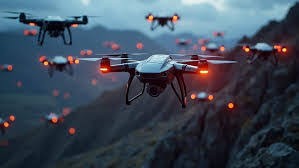
Looking ahead, the future of Drone-as-a-Service will be shaped by advances in artificial intelligence, autonomous flight, edge computing, 5G and 6G communications, cloud-native analytics, robotics, and digital infrastructure. Fully autonomous drone fleets operating under centralized management platforms will increasingly perform scheduled inspections, environmental monitoring, precision agriculture, logistics, and emergency response with minimal human intervention. Customers will subscribe not only to flight services but to continuous streams of actionable intelligence that integrate seamlessly into enterprise workflows.
The evolution from hardware sales to Drone-as-a-Service marks a defining moment in the maturity of the global UAV industry. As organizations increasingly prioritize operational outcomes over equipment ownership, DaaS is emerging as the preferred model for deploying aerial intelligence at scale. By combining advanced drone platforms with artificial intelligence, cloud computing, automation, and industry-specific expertise, Drone-as-a-Service is transforming UAVs from standalone flying machines into strategic business solutions. This shift is redefining how enterprises create value from aerial data and positioning drones as indispensable components of the digital economy.